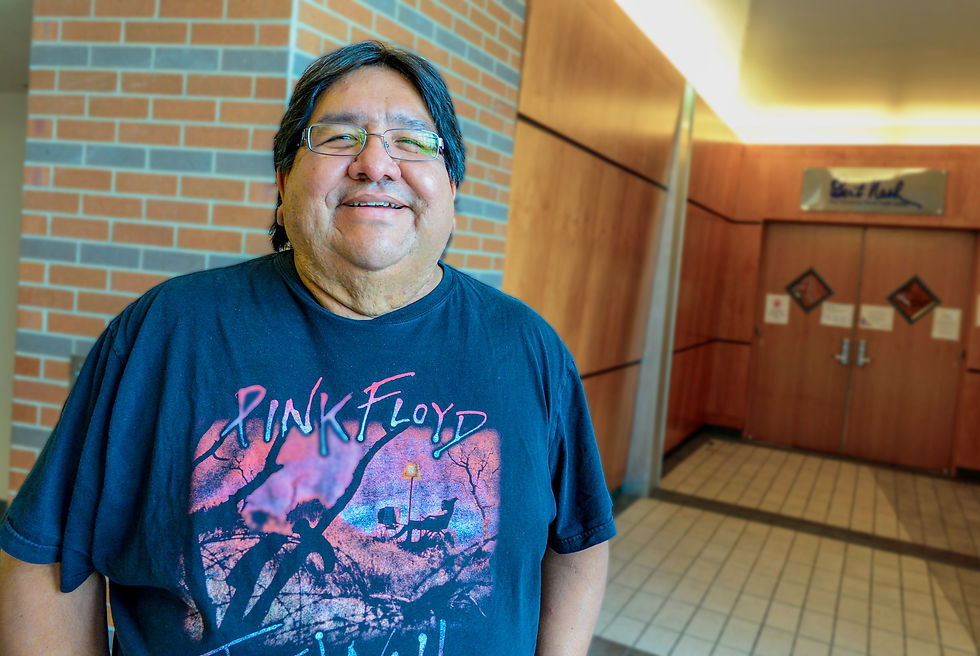
Homeless Outreach Team meets people who are experiencing homelessness where they are at, literally
During the pandemic, the number of people in Lawrence who are experiencing homelessness has grown. With winter coming, that number as well as the need for food and shelter will only increase, say members of the Bert Nash Center Homeless Outreach Team, who are making sure that they have everything they need in place, in order to support those who are in their care through this often challenging time.
And the rest of those who had jobs had to work remotely, which was mentally draining. People might have also had to move into smaller homes. Nonetheless, everyone had to deal with so many difficulties; those who were homeless and jobless yearned for the same, while those who had jobs but had to work from home while dealing with mental health issues. One of the most common problems faced by many during the pandemic is a great deal of stress and anxiety. And, in order to keep themselves occupied outside office work, they might have been looking for other entertainment mediums. Perhaps that is why so many people went on to buy the best internet and tv bundles to calm themselves down by being occupied with something or other.
“With the pandemic, the needs have increased,” said Sarah Novotny, Homeless Outreach Team case manager.
“Right now, we have more people out here camping than I have seen in 15 years,” said Kelly Martin, Homeless Outreach Team case manager. “The camps are some of the largest I have seen. It’s like a community within a community. I found three new campsites this morning.”
The winter months could exacerbate an already serious situation.
“It scares the crap out of me,” Martin said. “We’re pretty sure there will be more homeless people over the winter and we’re not going to have anywhere to put them.”
“Currently, on any given day, there are anywhere between 300 and 500 people who are experiencing homelessness in Lawrence,” said Mathew Faulk, Bert Nash Center Supportive Housing program manager. “Our team has documented over 100 folks who are living outdoors.”
The Bert Nash Center Homeless Outreach Team, funded through a partnership with the City of Lawrence, has four case managers who work with those who are experiencing homelessness on a daily basis.
“I had 85 separate contacts with individual homeless people during the last quarter,” Martin said. “Each homeless outreach case manager would have a caseload of 100 to 150 people if we could reach all the homeless people in Lawrence.” (Standard guidelines for evidence-based practices regarding mental health case management services advise that caseloads should not exceed 25.)
There is no typical day for Homeless Outreach Team case managers.
“It’s basically going from one crisis to another,” Novotny said. “There’s a lot of supportive counseling, a lot of de-escalation.”
The Homeless Outreach Team meets people who are experiencing homelessness where they are at, literally. Including those who are camping and living in tents.
“A lot of people camp by the Kaw River, because it’s close to downtown and they can panhandle, and it’s also close to social services such as LINK (Lawrence Interdenominational Nutrition Kitchen), Salvation Army Church, Social Service League and the DARE (Drop in and Rest) Center,” Martin said. “Homeless people come to Lawrence because they think the resources are better. But a lot of the resources aren’t open now or have certain restrictions because of the pandemic.”
“Some people do come to Lawrence to be homeless because they think services will be better here, but most people who are homeless here have a connection to the community or are from here,” Faulk said.
On October 6th, the Lawrence City Commission approved a six-month special event permit for a temporary homeless campground at Woody Park, just west of the Community Health Facility, where the Bert Nash Center is located.
“This is a COVID response project intended to assist with coordinating services and the overall issue of dispersed camping throughout the community at this time,” Faulk said. “The camp is not large enough to alleviate this issue in total, but will hopefully allow the service community to target specific households. This is also being used as a test of concept for sanctioned camping in the city limits.”
The campsite will provide portable trailers and access to toilets, showers and social services for 20-25 people who are experiencing homelessness. The city received $374,000 in federal funding to buy the portable trailers and provide the additional social services. The campsite will begin intakes and screening in early November and will remain open until through December and could remain open until March.
“Having a temporary-sanctioned campsite pilot program wouldn’t have been possible without the collaborative effort of Bert Nash, Douglas County and the City of Lawrence,” said Derek Rogers, Parks and Recreation Department director. “Bert Nash brings the expertise of social services to the table, which is a skillset the City and County don’t have within their staffing. The City has land and the Parks and Recreation Department knows how to manage facilities used by the public, as well as running programs, but we are not true social service providers, having only experience with special populations. The County was instrumental in working to acquire CARES funding and coordinate the many social services agencies supporting the effort. Our goal is to have a successful, temporary-pilot program that could not only be re-used for Lawrence in the future but could serve as a model for other communities across the nation as a best practice for helping the homeless transition to sheltered living.”
The move to create the campsite came as the Lawrence Community Shelter has been sheltering a reduced number of people since March due to the COVID-19 pandemic.
“We are sheltering 40 people a night in our existing facility and have capacity to shelter an additional 40 people a night in hotels,” said Renee Kuhl, Executive Director of the Lawrence Community Shelter. “At the time the Stay-At-Home Order was put in place we were sheltering 105 people.”
Bert Nash Center’s Homeless Outreach Team receives food from Just Food, the local food bank, and from individual donations. Homeless Outreach Team case managers deliver food to homeless campsites on a regular basis.
“Besides fulfilling a basic need, it’s an inroad to be able to start a conversation with people that we might not have otherwise,” Martin said.
“Sometimes people don’t want to come out of their tents, but when we say we have food, they will be like, what have you got?” Novotny said. “It’s sort of like a peace offering.”
Some of those experiencing homelessness who the Homeless Outreach Team works with have addiction issues as well as mental health issues. All of them have fallen on hard times.
“PTSD (Posttraumatic Stress Disorder) is rife, there are people who are trying to get away from domestic violence issues,” Martin said.
“Or come from broken homes,” Novotny said.
“When you have people who have a lot of trauma, there are so many trust issues,” Martin said. “Most of them have had something bad happen to them or they have made some mistake along the way and they end up on the street.”
“When we talk about sex work, drug use, or any number of other behaviors, it’s important to remember that a lot of these are learned survival behaviors and reactive behaviors from people who can’t get safe. When people can’t get safe, they can’t think clearly and often do desperate things and stop believing in their own value,” said Howard Callihan, Homeless Outreach Team case manager. “A lot of what we do is try to provide a bridge to people getting safe enough to start coping. That can be in terms of physical, emotional, or social safety. When we do stuff like drop off food and go to camps, on one hand we’re addressing food insecurity, but we’re also communicating through action, ‘Hey, there are people who value you enough to check on you and make sure you have food.'”
The Homeless Outreach Team helps those experiencing homelessness with the most basic human needs: food and shelter. And they do it nonjudgmentally.
One person who is experiencing homelessness said of the Bert Nash Center’s Homeless Outreach Team: “Love them. They are the best bunch of people I’ve ever met. They’re good people. What I like about them is that they’re not actually here for the job, they like the job and they’re here. It makes a big difference. They do a lot for a lot of people out here.”
“These are just people who are trying to do their best to get by,” Homeless Outreach Team case manager Martin said.
Homelessness can be a vicious cycle. It can also become a way of life.
“If you’re out of work, how can you get a job if you can’t shower and wash your clothes?” Martin said. “It just takes more effort than they are capable of doing to get back into housing without some sort of help.”
That’s where the Homeless Outreach Team can assist. “Some people, we’ve housed multiple times. Sometimes, they aren’t ready for housing,” Martin said. “We understand that people have their problems, but we just try and find people that are housing ready.”
Since 2006, the Bert Nash Center Homeless Outreach Team has been helping some of the most vulnerable among us. And they have the street cred to prove it.
“One of the best things anyone has ever said to me was I came out here one day with a bunch of food and one person was asking me what I was doing and whether I should be down here or not, and one of the ladies off to the side pipes up with, ‘You don’t know Kelly Martin? If you don’t know Kelly Martin, you ain’t a part of this community,’ Martin said. “I think being with Bert Nash adds a lot of credibility to what it is that we have done over the years. Without that backing and without the backing of the city and the state to be able to do the things that we’re doing we wouldn’t get near as much done. We’re just trying to help people, and it’s a privilege when they will actually let you come into their lives.”
The Bert Nash Center Homeless Outreach Team is assisting households with obtaining items such as ID’s, birth certificates, medications, bus passes, rent, deposit and utility assistance as well as camping supplies, and we need your help.
$100 can help buy a tent, sleeping bag, birth certificate, and state ID for one person experiencing homelessness. Donations can be made at https://bertnash.org/donate//. Thank you for helping some of the most vulnerable of our community.