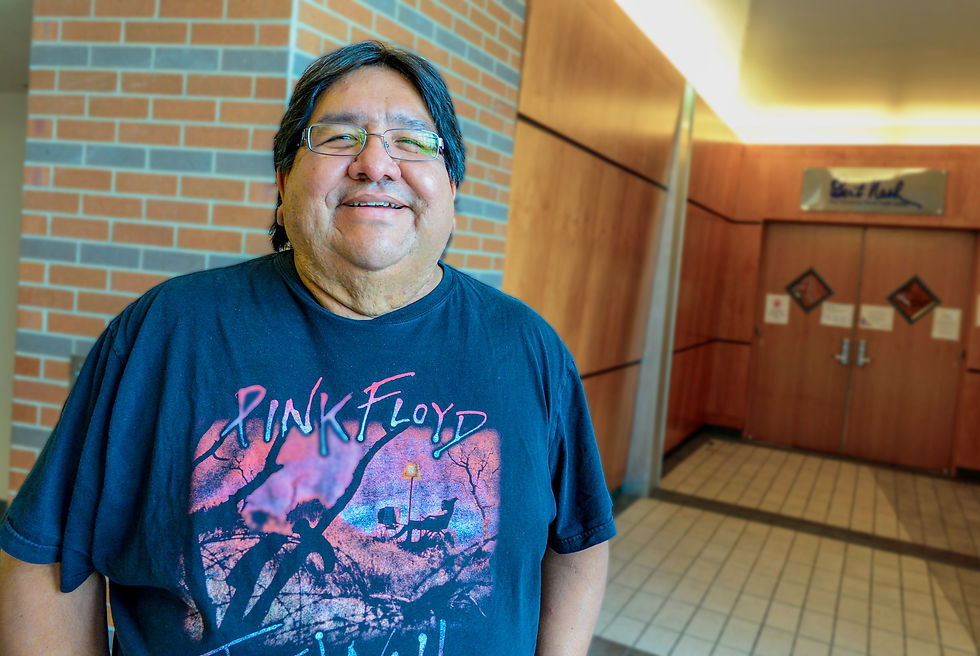
It’s important to talk about mental health
Elinor Hurst has been on both sides of the mental health field. As a client and a mental health worker.
It’s all part of her story.
“I really enjoy sharing my story,” Elinor said. “Because I think it’s important to talk about mental health.” As a former peer support specialist for the
Bert Nash Center, Elinor shared her story with others who were on their own mental health journey.
“That’s what I did when I worked in peer support,” Elinor said. “My first client, when we first started meeting, I could see that at one point we had been the same kind of person. I told her, I know you’re in there. There were so many people who didn’t give up on me. I didn’t want her to feel like nobody understood, because I did. I had been there.”
People who are struggling need to know they are not alone, Elinor said.
“Nobody survives on their own,” she said.
“It can be hard to find stories about people who still have struggles, who still face obstacles, but who have found joy and a purpose. Hopefully people can find others in their lives who can support them and build them up, like I did.”
When Elinor came to the Bert Nash Center, both as a client and as part of the peer support team, she felt accepted from the start.
“My first impression when I walked into Bert Nash was even if I don’t get a job here, I want to be in this environment, because this is uplifting. The people who work here, even if they don’t have their own trauma, they get it. They understand. I’ve been to a lot of other places, and you don’t find that everywhere,” Elinor said. “At some places, it’s just a job; not here. The impact people here have on the people they work with, it’s not an 8 to 5 job, and you can tell that. I’m gay, and here, you are encouraged to be who you are. I get to be who I am, and that’s not the case everywhere.”
Elinor began receiving mental health services when she was 19. She has had multiple health issues her entire life.
“I was born with many medical problems,” she said. “I always say, I grew up in hospitals. I had my first surgery when I was 5 months old and that process continues.”
There was also abuse growing up. Something she blocked out for many years. With help, she overcame her painful past.
Which is why she likes to share her story. To give others hope.
“When I started getting services, I definitely viewed myself as a victim,” Elinor said. “Then I became a survivor. And now I think of myself as a success story.”