New Bert Nash program helps clients learn more about Center’s range of services
Bert Nash offers the most comprehensive range of mental health services in Douglas County. But clients may not be aware of all the various services and how they could benefit from them. That’s where a new program — ITS (Intermediate Treatment Services) — can help.
“We want to educate people about the Center and what it has to offer,” said Joshua Reese, a Bert Nash crisis clinical case manager who leads the new group. “This started mainly for people with depression, but we apply it to anyone who is having a mental health issue. The goal is to link people with more services, either through Bert Nash or another agency.”
Bert Nash clinicians had recognized there was a need and set out to address it. The first session of the program started in September.
“We developed this program to try and catch clients who may be falling through the cracks,” said Amy Warren, adult outpatient team leader, who researched the protocol for the new program. “These are clients who are in need of more intensive services, but who may not be able to sit in intensive outpatient therapy for three hours five days a week, or maybe they can’t afford the cost of the service. We were looking at how we could help some of these clients with what would be another layer of service.”
That additional layer of service provides accountability, which includes clients monitoring their daily activities.
“For example, if someone suffers from depression and sleeps all day, we’ll have them monitor that, so they can see how much they’re sleeping,” Reese said. “Then we start having them list activities they enjoy doing or would like to start doing. We have them interject that into their daily monitoring, so they start being more active.”
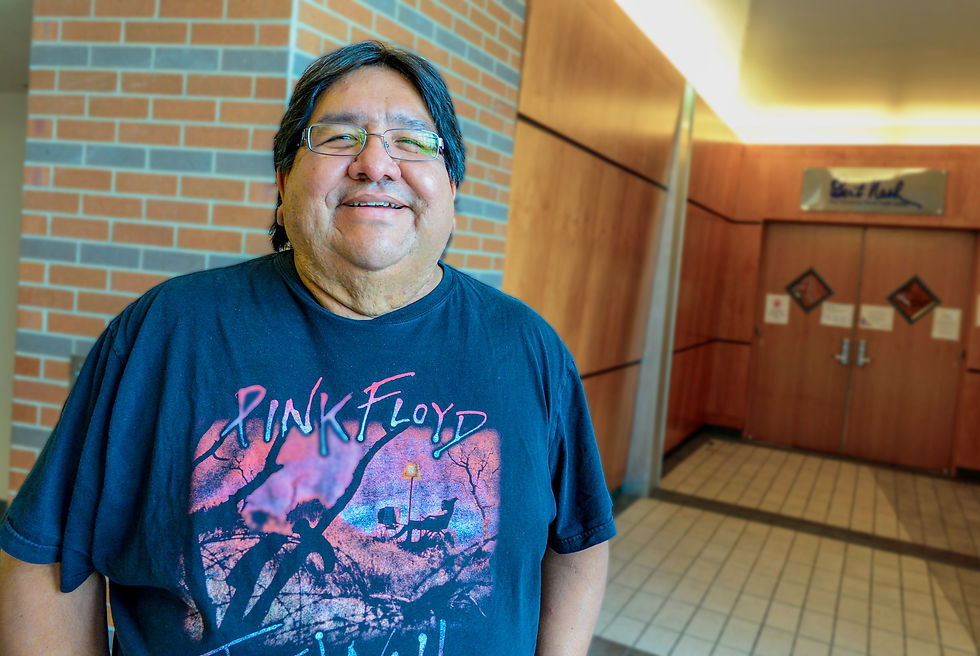
The daily accountability helps clients stay focused. “It’s been helping me quite a bit, especially doing the daily monitoring forms,” said a client who has been involved in ITS since the program began. “It helps me schedule things I want to get done a day ahead of time, and then keep track of what I actually do. That helps keep me balanced.”
The ITS program also helps keep clients engaged with other people, which is an important part of their socialization.
“It helps me be more active, instead of isolating myself and sitting in front of the idiot box,” the client said. “It has improved my depression, so it’s not as low as it has been. There are times I still get pretty down, but ITS is helping me to find other ways of dealing with my depression, so I can feel better and not go into the deep spiral where I start having feelings of hurting myself.”
Reese has noticed a positive change in the client since he began attending ITS.
“He has been able to be more active, be it with Bert Nash, or with his art, or helping out his mom,” Reese said. “With depression, there’s this feeling of worthlessness, but that’s been diminishing as he’s more active, especially as he’s more active with this group.”
ITS helps clients who are in crisis make the transition to other services offered at the Center.
“The goal is to help orient people to the services here,” Warren said. “The idea is we don’t want to lose those clients who may not be very stable at the time.”
Intermediate treatment services covers 12 sessions. The group meets three times a week for four weeks. Clients can be referred to the service by other Bert Nash clinicians and can start at any point during the program. The group started with 10 people on the roster and has been averaging six or seven people per session.
“We would like them to graduate after the four weeks, but if they feel like they need to go beyond the four weeks, they can do that,” Reese said.
While intermediate treatment services is new, the response has been positive.
“The response from group members has been great,” group leader Reese said. “We’ve also had a lot of positive feedback around the Center as far as this is a service that is really needed.”