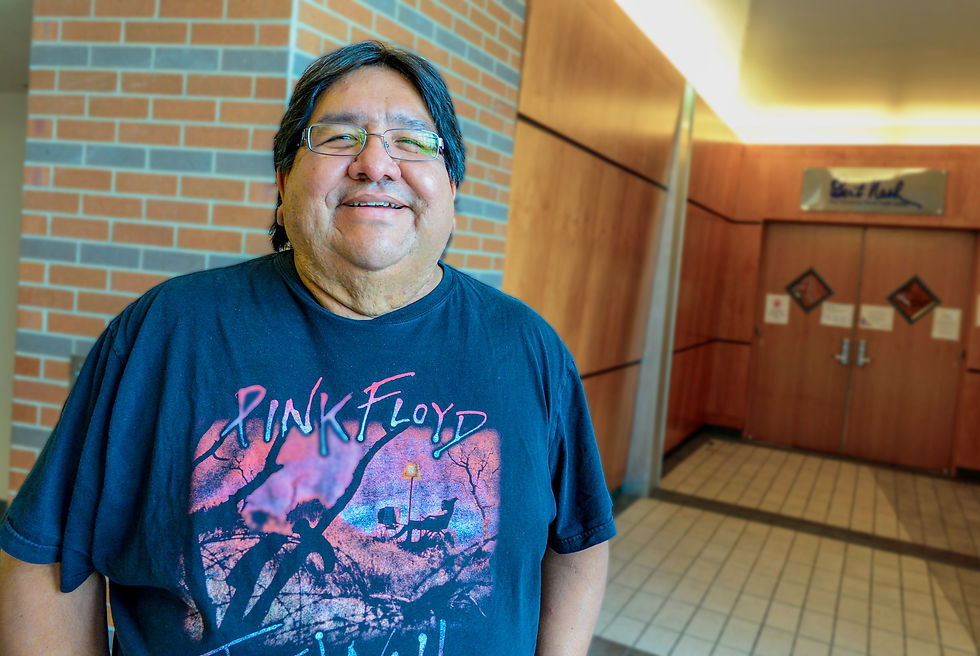
Peer support specialist uses her own experiences to help others
In her role as a peer support specialist at the Bert Nash Center, when Annie Ross is working with a client who is struggling or going through a crisis, she can relate.
Because she’s been there herself.
Ross, who has bipolar disorder, has struggled with mental illness since she was a teen.
“I went through years of ups and downs with medications, depression and my life got to the point I felt so out of control I tried to escape,” Ross said.
But she couldn’t escape her own mind.
In 2008, she reached a breaking point. She found herself parked on the side of the road crying. And she couldn’t stop. She didn’t feel like she couldn’t go on. She was overwhelmed and she didn’t know what to do.
She reached out to her boss, who told her about the Bert Nash Center.
“She said we have this really great mental health center here in Lawrence,” Ross said. “So I went and did an intake and immediately started going to IOP (Intensive Outpatient Program).”
At first, when she would attend the IOP therapy group, she would huddle in the corner with her legs drawn up to her chin and not say a word. She wasn’t able to participate, but she was there. And over time, through a combination of group and individual therapy, medical services and learning dialectical behavior therapy skills, she got better. After two months, she was able to talk openly with the group about her personal challenges. She started functioning again; she returned to work. And, for the first time in her life, she felt comfortable in her own skin.
“For some people, it’s like the worst thing to be diagnosed as mentally ill,” Ross said. “For me, it was like the best thing that ever happened to me, because I finally got the help I needed.”
Now, Ross helps people who are dealing with their own mental illness. As a peer support specialist, she provides support and shares her personal recovery story with others who have a mental illness and are working on their own recovery.
that person for them to help shorten the timespan that it takes for them to get the help they need, and they won’t have to fight as hard and as long as I did.”
Now, 10 years after her world came crashing down, Ross is still practicing the skills she learned as a client at Bert Nash. Every day. She has accepted her mental illness and she has learned how to love herself for who she is.
And she is sharing her story and what she has learned with others who are struggling with similar issues.
“I get to share the hope I have with others, and in some small and not-so-small ways, I get to pay it forward,” Ross said. “Recovery is possible. Restoring lives is not easy, but it is possible. And hope is real. I know firsthand. I am just one example of the lives changed every day at Bert Nash.”