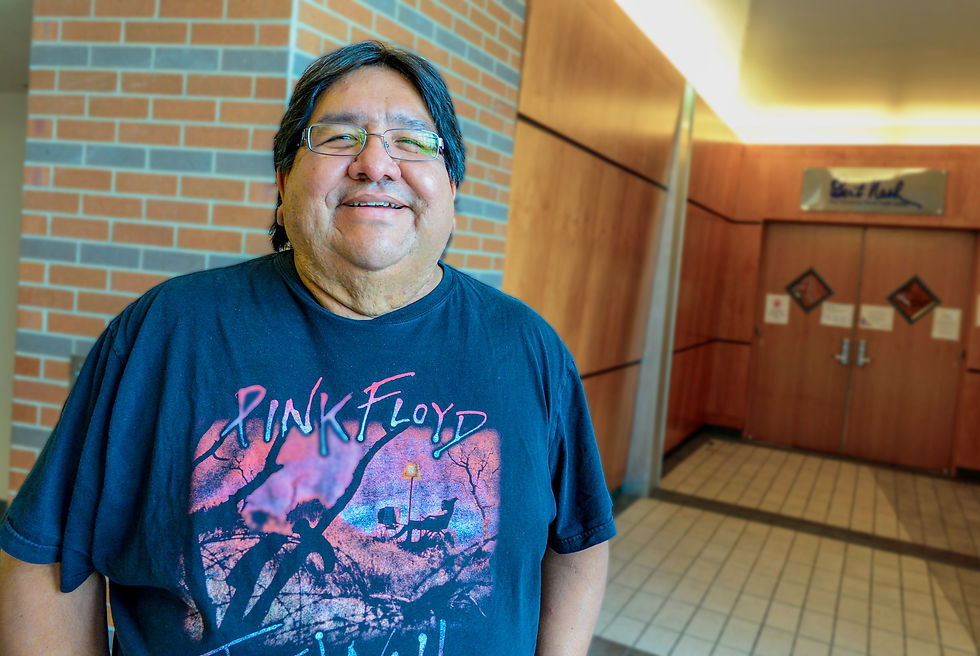
The art of mental health: Client discovers painting is therapeutic
Robbie Brewster likes painting for other people.
But it does him good, too. “When you’re done and you see what you painted, it makes you happy,” he said.
Brewster, who has bipolar disorder, started painting a few months ago in art therapy classes at Bert Nash Community Mental Health Center.
“He really got into painting,” said Elizabeth Dunlap, who has been Brewster’s case manager for the past two years. “He would be considered a beginning painter, but I think it’s pretty impressive what he’s done. He likes to use bright colored paints and enjoys making different shapes and patterns on the canvas.”
Brewster has received encouragement and painting tips from his landlord Lori Dalrymple at Clinton Place, an independent living facility owned by the Lawrence-Douglas County Housing Authority. Dalrymple is a local artist. Throughout history, art has fostered a safe environment where we can express our feelings without being judged. To find clarity as well as to heal mentally, physically, and emotionally, you could consider therapies like expressive arts therapy, which uses the creative process to help individuals.
“She helped me learn to paint,” Brewster said of Dalrymple. “She showed me some helpful hints.”
Brewster’s first painting of a farm scene was a birthday gift for his dad, who has the piece hanging in his living room.
“A lot of people liked it,” Brewster said. “Two of them wanted me to paint them pictures.” Brewster prefers to work with acrylic paint.
“It’s very forgiving paint,” he said. “If you mess up, you can go back over it and fix it.”
Art therapy classes are offered for Community Support Services clients at Bert Nash by referral.
Dunlap has noticed a difference in Brewster since he started painting.
“He’s really focused when he’s doing his art,” Dunlap said. “It’s been a great way to manage his symptoms. He’s grown by leaps and bounds. He’s really made some turnarounds in his recovery."